
I have just been plowing through the sequels of nineties FPS’s lately. This time it was back to Castle Wolfenstein for me… although, technically, I am not sure if that castle in the distance is actually the Castle Wolfenstein, you know the one I escaped from (with the plans) back in 1981.
This is the best looking game I have played in awhile. When you devote most of your gaming to the Wii and $5 steam games you forget just how awesome computer graphics are these days. They seemed to have captured every little detail of a war torn 1940’s German village. That is everything except the German accents. These are some of the cheesiest German accents you will hear outside of a corn stock production of The Sound of Music. It’s like they just did a search and replace on the dialogue file swapping “W” with “V.”
However, this game, like Wolfenstein 3-D before it, is all about the shooting. Wolfenstein does a good job with this. The guns feel powerful and do lots of satisfying limb damage when blast away at those damned Nazis. The twist with this game is that you gradually develop supernatural powers that allow you to shield yourself, change time and inflict extra damage. When you engage these powers the world turns bluish green and you are shifted into a sort of H.P. Lovecraft dimensional space complete with floaty monsters and howling wind sounds. This looks neat, but rarely do the powers have anything to do with puzzle solving the way the gravity gun did in Half-Life 2. They are just there to give your player an extra advantage during tougher gun fights. Playing at normal difficulty, I never really felt that overwhelmed by the enemies but, overall, I enjoyed the game play and the shallow story line.

By the time this record came out, RevCo had lost much of its lustre for me. I guess I like a few of the tracks well enough, but, for the most part, they all are just too repetitive (yeah, I know. “Industrial music” and “repetitive” are pretty interchangeable) and overly long. The record just feels like one long brainstorming session with too many cooks and too much heroin.

This was a strange, dreamy giallo that reminded me a lot of Bava’s Lisa and the Devil. At any moment you don’t know what is real or imagined. Eventually the film takes a wild turn into the world of witchcraft and paganism that, like just about every plot point in this film, never seems to make any sense. Even when the truth was finally revealed at the end I was still scratching my head. But I stuck with it all they way through mainly because of the stunning visuals and incredible soundtrack (one of my absolute favorite Bruno Nicolai scores).

This sci-fi classic starts off interestingly enough: in an authoritarian society on the Moon, an engineer befriends a self-aware computer who has taken to practical joking. There are hundreds of different speculative fiction pathways this concept could have gone, instead Heinlein devoted the remaining ninety percent of the book detailing the administrative ins-and-outs of planning a revolution. Literally administrative minutia like how many members per sleeper cell and parliamentary rules. This makes for some severely dull reading. What an overrated piece of garbage.
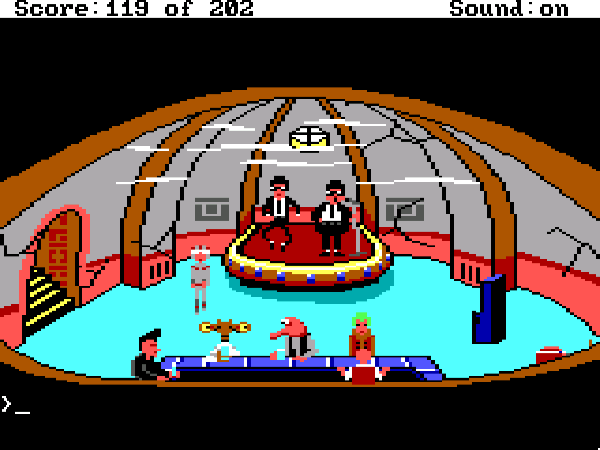
It’s been quite some time since I tackled a Sierra 3-D adventure game (See my reviews of Kings’s Quest I, II & III and Leisure Suit Larry). I’ve said it before, but I just love the unique pixelated artwork and animation of all these games.
I don’t think I ever finished this game as a kid, but I must have gotten pretty far since I was able to progress through most of the game this time without much trouble (if only I had a video game blog when I was 13 years old). These Sierra games are notoriously unfair. Exploration and experimentation will get you killed without warning. As infuriating as that could be, I usually don’t mind because half the fun of the game is finding all the strange and gruesome ways you can die. The only part of the game that is really sucks is that you need to gamble in order to earn money at one point. There is no way to get past that section without relying on game saves and constant restoring. This could be fun if the game-within-a-game relied on skill or strategy, but it’s just a simple luck-based slot machine (that can kill you). But still, you gotta love the cameos from The Blues Brothers and ZZ Top.
This was a beautifully shot Sergio Martino giallo. We soon find out what Mrs. Wardh’s (no that’s not a typo) vice is and then quickly forget it since it has little or nothing to do with the convoluted plot. There are some nice twists and turns, none of which are even remotely believable. But the film is never boring and, in addition to the early 70s swinger vibe, there is also plenty of George Hilton euro-stud badassery.
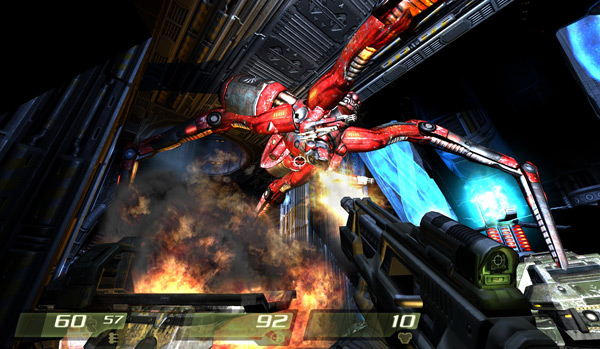
This is essentially the same game as Doom 3 except with the lights turned on and fewer monster closets. What both these games do well is provide tons of satisfying gun-play but with only the barest of story lines to keep you motivated to continue. I think the plot of this one was to find the big button that will win this war, but first find these three lesser (but still challenging) buttons. There is some variety in the form of a few turret and driving missions, but for the most part this is nine hours of pure arcade style run-and-gun action.
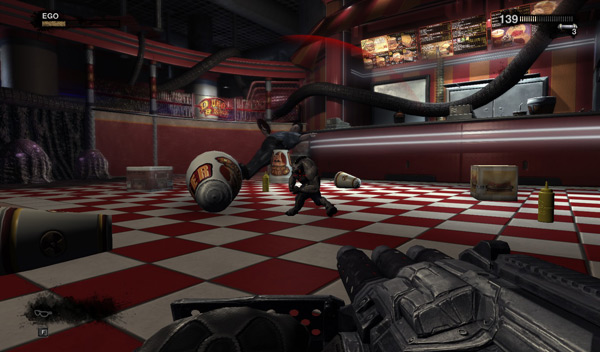
The original Duke Nukem 3D was perhaps the best of the first wave of FPS games. I also really liked Rise of the Triad and, of course, Doom but Duke was filled with tasteless humor, pop-culture references and a richly interactive world. For some reason Duke Nukem Forever has only a 53 Meta Critic rating and I can’t for the life of me see why. Sure its was released about 8 years too late and it doesn’t really bring anything new to the genre, but everything that was great about the original game is still here. I felt like there was just about the right amount of variety in game play and I especially liked the levels where I was shrunken to action-figure size and made to navigate through giant jars of mayo and mustard. I guess the only big difference here (outside of the expected technological improvements) is that they have brought the tastelessness more to the forefront of the design—the game opens with you standing in front of a urinal controlling a stream of pee. I’m glad this game finally was released and I hope that the franchise will live on, but, fellas, please just try to release next one sometime this decade so that the references are somewhat more timely.

File this one under the “What were we thinking back then?” column. In 1991, this was the bees knees in and around my campus apartment but it has since lost much of its luster. The titular track is a rap parody, I guess? Or ironic rap? In any event, it’s poorly executed and clumsy (perhaps on purpose) with forced lyrics. The song mocks closed-minded rednecks and such, but, in hindsight, I get the feeling that RevCo were the close-minded ones with their myopic view of Southerners. Musically, this stuff hasn’t aged well either. In ’91 it took a rack of hardware synths and sequencers to pull this off, but nowadays a teenager with Garage Band on his Mac can create more interesting songs. The two live tracks are a little less jarring and offer a nugget (a chocolate nugget?) of what it was that attracted me to this band twenty years ago.
This is the original 1965 record that inspired the Phantom Surfers to create their great slot car themed record. The Go Sound was conceived as a way to cash in on the early 60s popularity of slot car racing. Once you get past the ridiculous thematic hook, this is really just a great, classic surf and drag record by The Hondells. The best line is from “My Baby Dig Slot Car Racing” when they sing (without a hint of irony) about a girl with “a heavy hand on a rheostat.”
