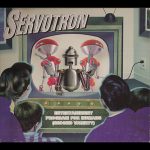
I think this was the last CD that Servotron put out. It is a collection of remixes and live versions of previously released songs. The remixes put a lot more emphasis on electronics and sound effects than the originals which would have been a welcome new direction for the band has they stayed together and recorded more new material. I will miss you my robot overlords. You were superior in every way.
Where have all the good schtick bands gone? Servotron were an awesome concept and the music was equally great. Their second album maintains the Devo-esque sound of the first CD with maybe a little more emphasis on synthesis than on No Room for Humans. It’s still a solid rock record but the bleeps and bloops get a little more room to shine. Some of the topics covered here: virtual pets controlling their “masters” and the chess dominance of Deep Blue.
This was the final film in the super excellent The Icons of Suspense Collection: Hammer Films five-disc DVD set. Unlike the other movies in the set, this one isn’t a straight up thriller. Without spoiling too much, let’s just say this one takes an unlikely sci-fi turn at about the halfway point. Up until that moment it’s a sordid tale of set of rebellious teddy boys and their torment of an American who has fallen for the gang leader’s sister. If it wasn’t for the fact that the actor playing the American lead is about three times the age of his love interest I may have liked this section of the movie more. As is, it’s just creepy and unbelievable (an this is before the ridiculous sci-fi stuff comes in). The only saving grace is the awesome rockin’ and a-rollin’ music in the background. Once the movie shifts things start to get dark and interesting. I still think this is the weakest of the films in the collection, but its twisted nihilism of the ending makes up for its plot and character shortcomings.
This is one of the CDs that my wife owned before we got married. I think she bought it on the advice of my roommate who, along with me, my brother and a few other friends, went and saw Screeching Weasel play at Treno’s in Urbana. I thought they were okay, my roommate obviously liked them more than me. I just remember we watched the show from the side of the stage—where the opening band had broken down their drum kit. While Screeching Weasel played my brother was stepping on a kick drum in time with the music. Ah, the stupid things you remember. Anyhow, this CD isn’t that bad. There’s a string of tracks from “Guest List” to “The Science of Myth” that are all excellent poppy punk numbers. However, this type of punk, the kind of stuff that defined Lookout Records in the 90s, is really not to my tastes. After about twenty minutes of “Whoa-oh-ah-oh” it gets a tad boring. Also, some of the acts that grew out of this scene are like the equivalent of boy bands for disenfranchised shopping mall punks and so the style just leaves a bad taste in my mouth. But I do really like Ben Weasel’s writing and lyrics, so, if I am going to have a pop-punk album in my collection, it might as well be this.
I recently discovered Prologue Books—a publisher devoted to re-releasing old pulp novels in ebook form. This is a company that understands ebooks. Every few weeks they offer a free book and everything else is priced just under four dollars. Don’t Cry For Me is a pulp crime novel about a former collegiate football star who has since gone on to associate himself with bookies, crime bosses and the assorted low lifes of 1950’s Los Angeles. There’s murder, mystery, booze and dames and it written in the that colorful, hard-boiled style that one would expect from a 50’s crime novel. A pretty entertaining read and I look forward to checking out more books from this publisher.
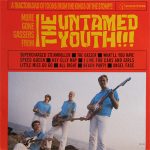
One of my favorite records from the early nineties. This is a great mix of vocal numbers and surf instrumentals featuring Derek “Deke” Dickerson’s great guitar stylings. And, although they are not at the forefront here, let’s not forget Mace’s great bass playing. Turn up that bass knob on your hi-fi and you will hear what I am talking about. Most of the songs on this LP were compiled on the Untamed Melodies CD with the exceptions of “Big ‘T’,” “Alright” and “Beach Party.”
I discovered Scratch Acid after becoming a The Jesus Lizard worshiper. At the time I remember thinking, despite have 50% of the JL lineup, how different the two bands were. Now listening to this years later, yeah they are different, but they don’t feel quite so distinct to me. Scratch Acid still falls a little short of the mark. Perhaps they are bit too noodle-y in the guitar department, Or maybe it’s just the lack of focus in terms of style. Still, there are some great songs here. “Greatest Gift,” “Crazy Dan,” and “Albino Slug” are my favorites. My band during by college years, Der Lugomen, owed a lot to Scratch Acid’s sound.
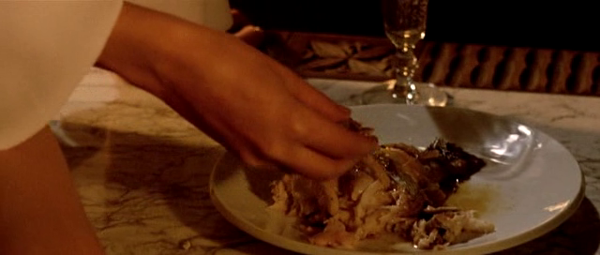
The Italian thriller Death Walks on High Heels is not terribly noteworthy even within the tiny cinematic sub-genre of giallo. There is, however, one scene in the movie that does jump out like a breaching marlin. It is the only film that I know of that sexualizes the eating of a grilled fish dinner.
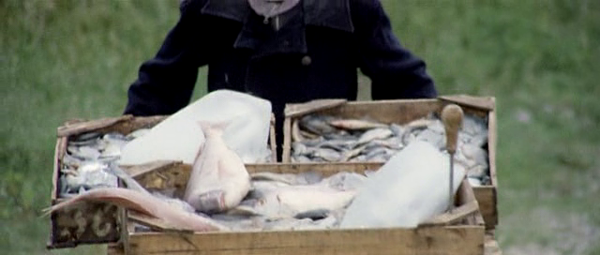
Nothing foreshadows an evening of passionate romance like a cart of dead fish.
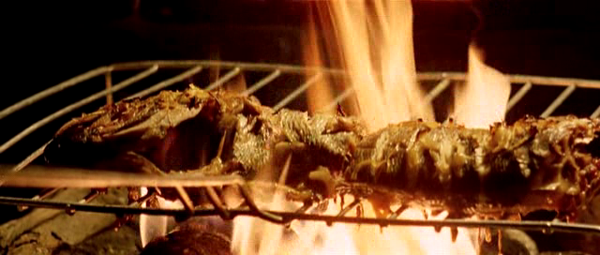
The flames of love have erupted beneath a pile of gnarly meat and scales.
That’s right, no silverware required. The best way to appreciate good food is by touch.
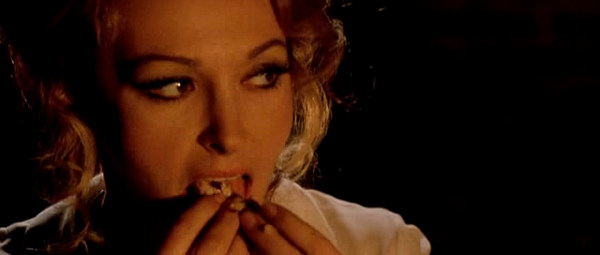
Next step, start ramming globs of flaky white meat into your mouth.
Be sure to chew carefully. You wouldn’t want to cut the evening short with a bone caught in your trachea. Well, a fish bone that is.
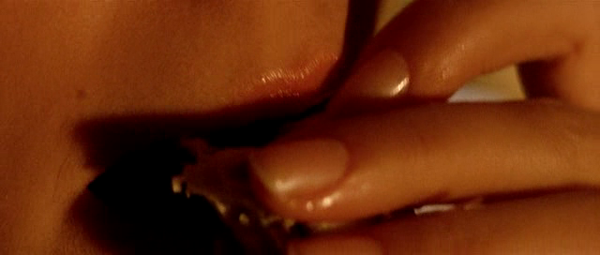
Here’s the Lucio Fulci close-up gore moment.
By the end, her fingertips are just covered in half-chewed fish matter.
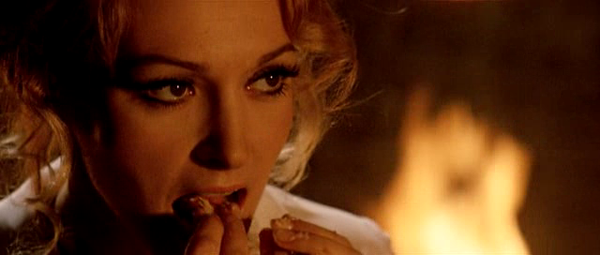
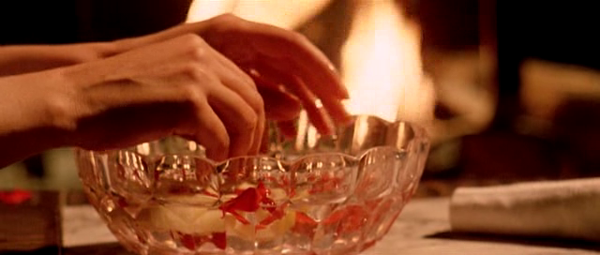
And that calls for a little clean up.
Now, bear in mind this scene goes on for like two minutes. The images of Nicole chomping are interspersed with clips of her lover, Dr. Matthews smoking, taking sips of what I suspect is J&B Scotch and then staring at her with creepy middle-aged man-eyes. I’m sorry, but there is nothing sexy about this and, for the record, I still hate seafood.
Although a bit lacking in terms of style, Death Walks on High Heels is another reasonably good giallo. The first part of the movie is filled with corny burlesque numbers and a cringe inducing romance that includes romantic, close-up grilled fish eating. Like a seafood Lucio Fulci. When the movie finally gets around to the business of murder it shifts gears and becomes a very standard detective story with lots of red herrings and the usual twists and turns.
I was bored silly by this classic sci-fi book. I wanted to like it. It’s voted as the greatest sci-fi series of all time. I’m not sure why. Perhaps because of the grand ideas it supposedly postulates, but heaven forbid those ideas get wrapped in an interesting plot with even moderately interesting characters. If only Asimov could weave a tale like he could grow his sideburns.